How can you check whether an AI citation supports a claim?
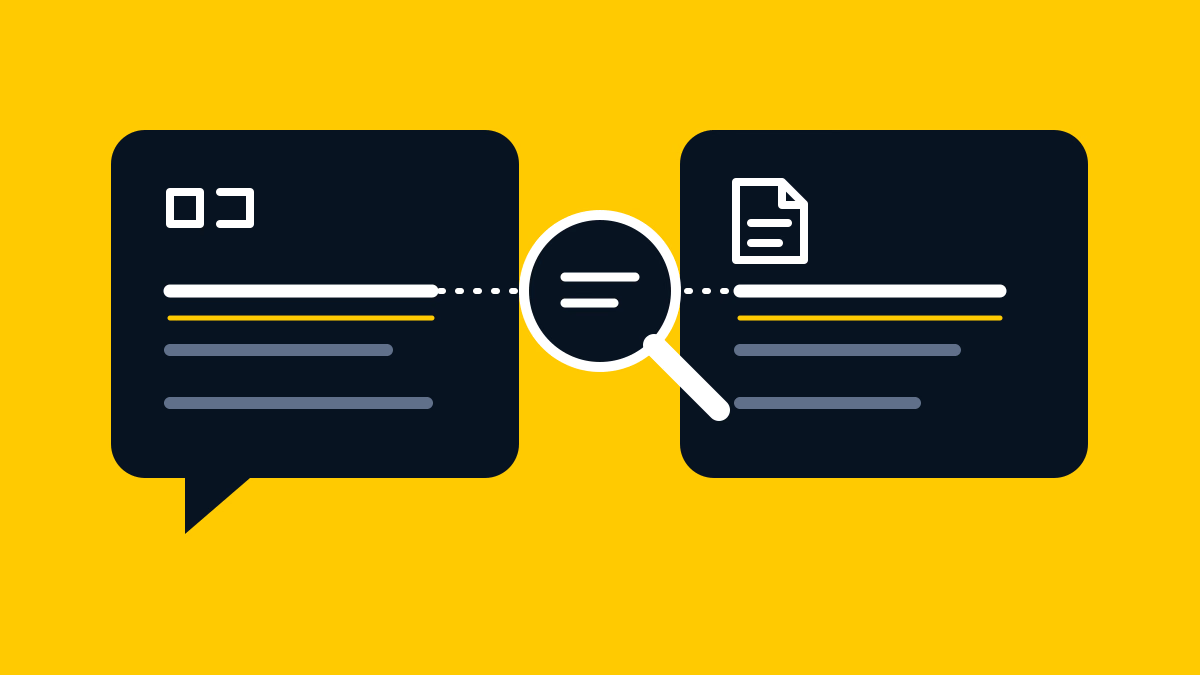
An AI answer can include a link without that page supporting everything the answer says. A citation is a reference shown with an answer. To check it, open the source and compare its relevant passage with the exact statement you want to use.
For example, a supplier’s page might confirm Japanese-language email support on one plan. That does not establish Japanese-language phone support on every plan. The useful result is a short note showing what the page supports, what the answer added and what remains unchecked.
OpenAI’s ChatGPT search guidance recommends opening cited sources to check support, publication or update dates, and authority. The steps below are Supasaito’s practical procedure for recording those checks so another person can follow your reasoning.
Save the question and identify the statement
Imagine asking an AI assistant:
Does Supplier A offer support in Japanese?
It answers:
Supplier A offers Japanese-language support on every plan, by email and phone.
Supplier A, this AI answer and the source passage below are invented for this exercise. They do not describe a real supplier or a test of an AI product.
Create a note or spreadsheet row for this check. Paste the question and the complete AI answer into it. Then copy the sentence you want to verify into a field labelled Claim to check. If the answer contains several sentences, this keeps the chosen statement separate from the rest.
Beside the saved answer, enter the product you used, the date you received it and any search mode the interface displayed. For example, enter the service’s actual name under Product; under Search activity, write “Not confirmed” if you could not tell whether it searched the web. These details help someone identify the answer you checked.
For our fictional sentence, make three points to check: the support language, the plans covered and the contact channels. “Japanese”, “every plan” and “email and phone” each need evidence.
Our guide to how AI assistants find information explains the difference between asking an assistant to find pages and giving it a page to read. Here, we focus on whether the linked passage supports one statement.
Find the passage that describes the service
Open the citation beside the statement. On the linked page, search for “Japanese” and read the surrounding paragraph. Look for a plan name, contact channels and any exclusions in nearby notes or tables. A company page saying that the supplier serves customers in Japan would not, by itself, establish the language of its support.
In this exercise, imagine the linked support page contains:
Japanese-language support is included in the Business plan, by email.
Copy the passage into your note under Source passage. For a real check, add the page’s title, URL and the heading under which you found it. That lets another person return to the same place. For this exercise, write “Fictional support-page passage; no real URL”.
Record any publication or update date shown on the page. If none is visible, enter “Update date not shown”. That leaves the date unchecked; it does not prove the page is outdated.
If your source is a summary of a study rather than a service page, also record which document you read. Write “Summary read; original report not checked” when that is what happened. Say that you checked the study’s methods only after reading the section explaining how the research was conducted.
Compare language, plan and contact channel
Read the AI sentence and the source passage side by side. The table makes the differences in this fictional example visible.
| Detail | AI answer | Source passage | What you can conclude from the passage |
|---|---|---|---|
| Language | Japanese-language support | Japanese-language support | The language matches for the service described. |
| Plan | Every plan | Business plan | The passage establishes support on Business. It does not establish support on every plan. |
| Contact channel | Email and phone | The passage establishes email support. It does not establish phone support. |
The answer has expanded the source’s description in two places: from Business to every plan, and from email to email and phone.
To make this comparison on a real page:
- Find the plan name. If the source says “Business”, keep that name in your sentence. Do not replace it with “every plan”.
- Find the contact channels. Record “email” if that is what the passage lists. Check a separate phone-support section before adding “phone”.
- Read nearby restrictions. A note such as “Business customers only” would limit who receives the service; keep that restriction with the claim.
- Check the date. Record the displayed date or its absence beside the passage. If you need to describe the current offering, resolve an uncertain date with current official information before relying on it.
Based on the fictional passage, a narrower sentence would be:
Supplier A includes Japanese-language email support in the Business plan.
“Business plan” and “by email” are the conditions that must survive the rewrite. The passage does not say whether other plans or phone support are available. Those questions remain open.
Write what the source supports and what it leaves open
For the original sentence, write Partly supported in a Citation check field. Then explain why:
The passage supports Japanese-language email support on the Business plan. It does not establish support on every plan or by phone.
The narrower rewritten sentence is supported by the passage as written. That is a finding about the match between the sentence and this passage.
Other checks can produce different findings. Use these descriptions as Supasaito’s review method:
| Finding | What to record |
|---|---|
| Fully supported within the passage’s stated limits | Copy the supporting passage and name the limits. In our example: Business plan, Japanese-language email support. |
| Partly supported | Identify the supported part and the additions. Here: Business-plan email support is supported; every plan and phone support are not established. |
| Contradicted by the cited material | Copy the conflicting statement. For example, if a different passage explicitly said “Phone support is available only in English”, it would conflict with a claim of Japanese-language phone support. |
| Not verifiable with the available material | State what prevented the check. For example: “Linked page could not be opened; passage support not checked”. |
The contradiction example is another hypothetical case, not a statement in our exercise passage. Silence about phone support does not mean phone support is unavailable. Equally, if you could not open the page, you could not judge whether its wording supports the answer.
Check the source as well as the wording
Matching a passage answers one question: does this source say what the AI answer claims? A second question remains: is this a suitable, current source for the statement I plan to use?
The ALCE research paper, published in 2023, evaluates two questions separately: is the answer correct, and do its cited passages support its statements? That distinction helps explain why finding matching words is only part of a check.
For a real supplier claim, check who publishes the page. Is it the supplier’s own support documentation, or an article describing its service? Look for the page’s date and the plan it describes. If you need to use the claim today and those details remain unclear, check current official documentation or ask the supplier to confirm them. Several articles copying one announcement do not provide several independent confirmations.
In our exercise, suppose the passage is on the fictional supplier’s own support page, no update date is shown and you have not read the other plan pages. A separate Source check entry would say:
Supplier’s support page read. Update date not shown. Other plans not checked.
This entry tells the reviewer what you actually inspected. It does not certify that the offering is still current. Keep it beside the citation finding, so a matching passage is not mistaken for a completed check of the current service.
Our explanation of Visibility, Clarity and Trust explores why claims that people can inspect matter when they evaluate an offering.
Keep a completed note with the evidence
For this fictional exercise, the useful part of your record would look like this:
- Question: Does Supplier A offer support in Japanese?
- AI answer / claim to check: Supplier A offers Japanese-language support on every plan, by email and phone.
- Source and location: fictional supplier support-page passage above; no real URL.
- Source passage: Japanese-language support is included in the Business plan, by email.
- Citation check: partly supported. Japanese-language email support on Business is supported; every plan and phone are not established.
- Source check: supplier’s support page read; update date not shown; other plans not checked.
- Revised sentence: Supplier A includes Japanese-language email support in the Business plan.
- Next action: check current official information before using the sentence as a claim about today’s service; find additional evidence before adding other plans or phone support.
For a real check, add the actual product, answer date and available search information saved at the start. Replace the fictional source label with the real title, URL and passage location. Keep the original AI sentence beside the revision so the reason for the change remains visible.
Start with one statement you intend to rely on. Find the passage, preserve its specific limits and record what you checked. The result should let another person understand both the sentence you can support and the questions that still need an answer.