Why ChatGPT Recommends Your Competitors — and How to Fix It
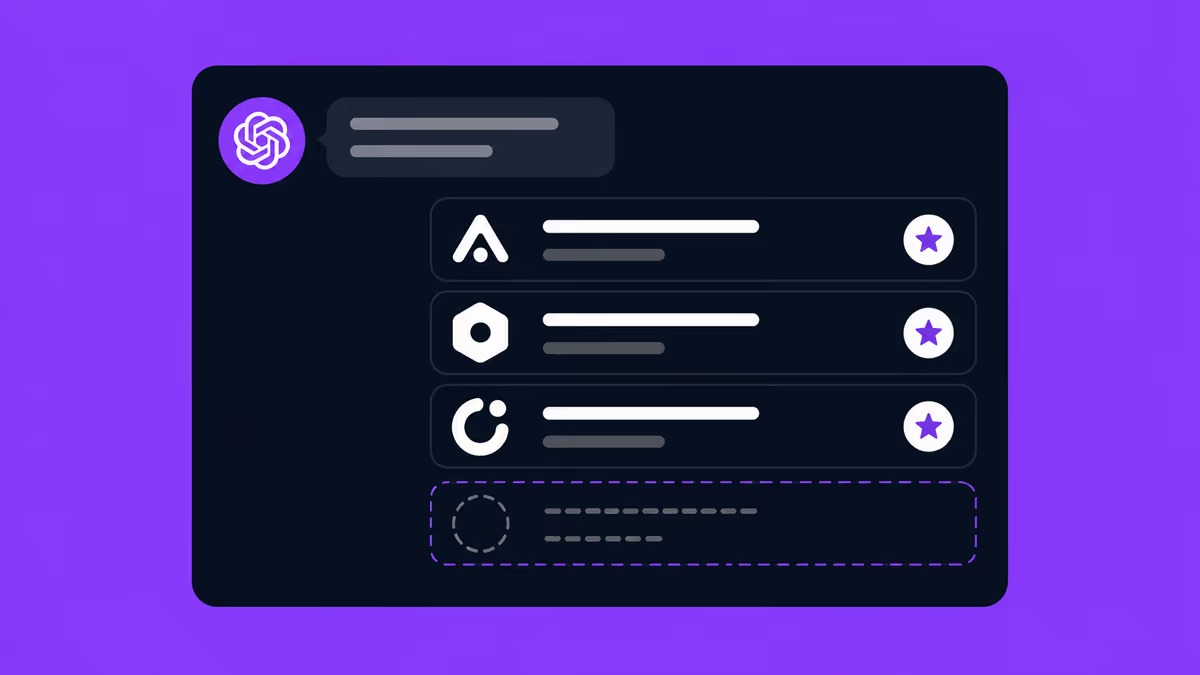
“I asked ChatGPT which company it recommends in our industry — and it named our competitors, not us.” Or: “We did come up, but the description of our business and track record was simply wrong.” We’ve been hearing versions of this more and more.
Customers no longer start from a list of blue links — they start from the AI’s answer. If your brand isn’t in that answer, or a competitor is recommended ahead of you, you may be losing the deal before you ever reach the comparison table.
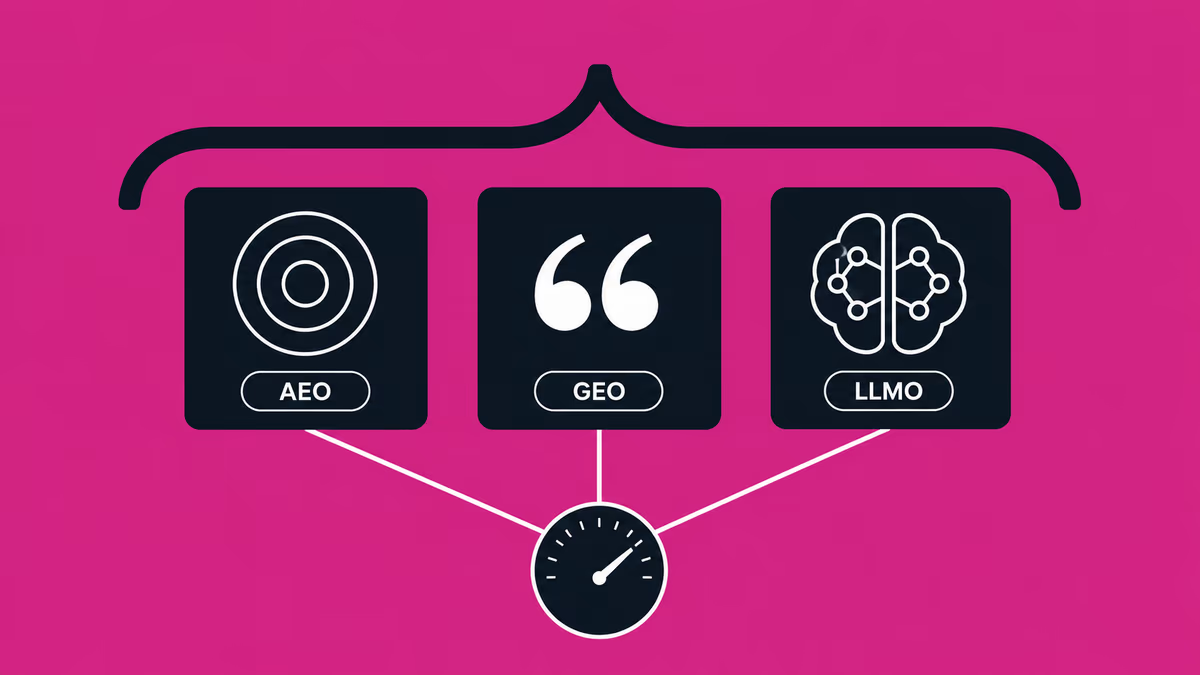
This article covers the five reasons your brand doesn’t show up in AI search (ChatGPT, Claude, Gemini, Google AI Overviews) and how to fix each one — written by a team that diagnoses and implements AI visibility as day-to-day work. At the end there’s a 15-minute self-check you can run yourself. For the terminology (how AEO, GEO and LLMO differ), see our AIO glossary.
The short answer: invisibility isn’t fate — it’s fixable
Here’s the point up front. Whether an AI recommends a given brand isn’t decided by luck or sentiment — it comes down to a handful of identifiable factors. Which means the reverse is true too: being absent from AI answers is an engineering-and-content problem you can fix.
And the key nuance is that the fix isn’t a “prompt trick” — it’s changes to your own site and your off-site presence. That’s exactly why a report that only measures the problem won’t move the number: to move it, you have to actually change the site and how the brand is represented elsewhere.
Why this matters now
In Japan, roughly 37% of people now use AI when they search (over 50% among people in their twenties) (CyberAgent GEO Lab. “AI Search Usage Survey wave-3,” Feb 2026, n=9,278). Yet while 90.8% of marketers say they’re aware of the risk from AI search (WILLGATE survey, 2025), only about 8% of companies have actually started on LLMO (PRIZMA survey, 2025). That gap between awareness and action is the opening — move now and you get ahead of competitors who haven’t.
The 5 reasons your brand doesn’t show up — and the fix for each
Here’s the whole picture first.
| Why you’re invisible | What’s happening | The fix |
|---|---|---|
| 1. No citable primary information | Your site has little trustworthy source material the AI can base an answer on | Publish primary information — cases, data, expert explanations — on your own site |
| 2. Structure the AI can’t parse | Missing structured data and unclear headings mean the AI can’t read your content correctly | Add structured data (FAQPage, etc.), clear headings, and an llms.txt for machine-readability |
| 3. Stale third-party data outranks your official site | Aggregators and old records get referenced instead of your latest official info | Keep official info current and push to correct external misinformation |
| 4. No third-party corroboration | Few mentions in comparison articles, reviews or PR | Grow third-party coverage and keep the brand facts consistent everywhere |
| 5. Brand-name ambiguity | Your name collides with a common word or a same-named company | Make your entity (company, product) unambiguous and align the facts |
A note on each.
1. No citable primary information
AI favors brands that own information it can base an answer on. If you’re mostly repeating what others say — with little that only you can provide (case studies, proprietary data, genuine first-hand expertise) — the AI has no reason to cite you. The starting point is publishing content that answers your customers’ real questions with primary information.
2. Structure the AI can’t parse
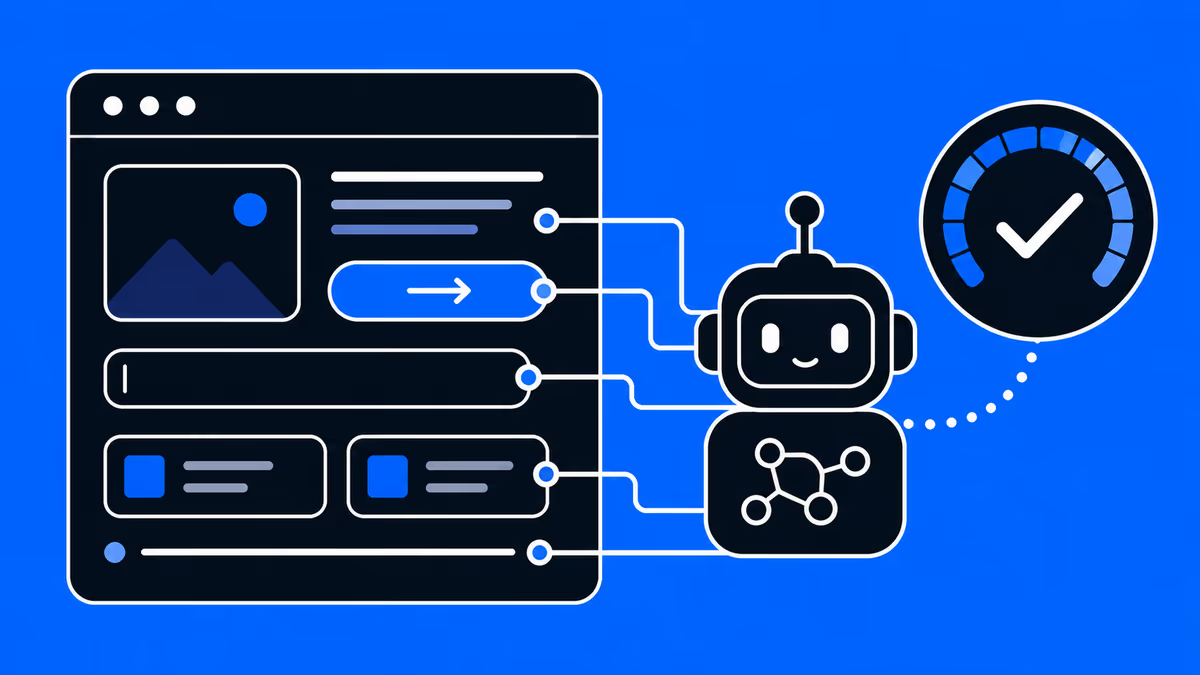
However good the information, it won’t land if it’s stored in a form the AI can’t read. Structured data, a logical heading hierarchy, a Q&A format, and a machine-readable summary (llms.txt) — this kind of “AI-parseable structure” heavily influences your odds of being cited. We ship llms.txt on the sites we support ourselves. Google now scores this machine readability directly, as a new PageSpeed Insights category (our Agentic Browsing guide).
3. Stale third-party data outranks your official site
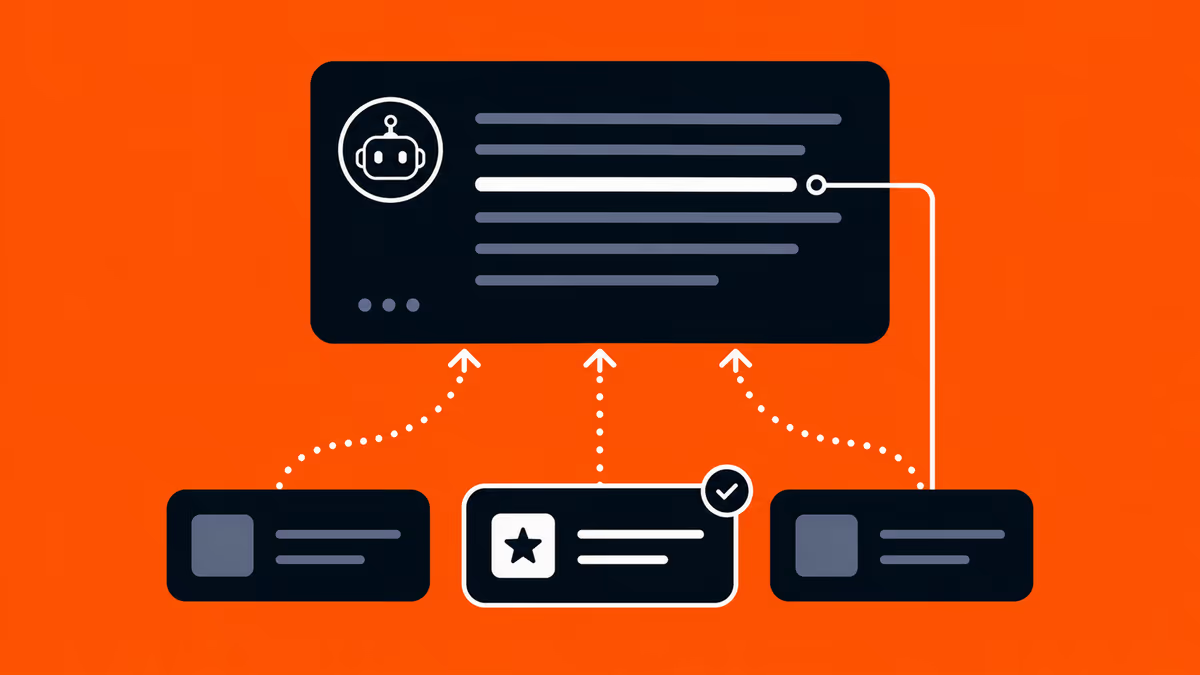
AI assembles answers from both real-time retrieval (RAG) and training data. In the process, a stale aggregator page or outdated company record can get referenced ahead of your official site — so the picture the AI paints of you is “how you looked a few years ago,” or simply wrong. The fix is keeping official information current and working to correct the external misinformation.
4. No third-party corroboration
This one gets overlooked, but it’s among the most influential. In an AirOps study of 21,311 brand mentions across discovery-stage commercial queries (“which company do you recommend?”-type questions), brands were 6.5× more likely to be cited from third-party content than from their own domain (AirOps: The Influence of Offsite Signals in AI Search, 2025). And roughly 90% of those third-party citations came from listicles, comparison pieces and review sites. Polishing your own site isn’t enough — external mentions, and their consistency, are what’s being tested.
5. Brand-name ambiguity
If your company or product name overlaps with a common word, or another company shares the name, the AI can’t pin down which brand the question is about — so it avoids mentioning you, or blends in another company’s information. The fix is making your entity uniquely identifiable (legal name, what you do, location) and keeping those facts aligned across your site and external sources.
A 15-minute self-check
Before you outsource anything, you can gauge where you stand yourself. Open ChatGPT and Gemini (Claude too, if you can) and put three kinds of questions to each. It takes about 15 minutes.
- Category question: “Which companies do you recommend for [service] in [industry / region]?” — Do you come up? Who are the competitors?
- Named question: “What kind of company is [your name]?” — Are the business, strengths and track record accurate? Anything wrong or out of date?
- Comparison question: “What’s the difference between [your name] and [competitor]?” — On what basis is the AI leaning one way?
Record four things: (1) whether you were mentioned, per engine; (2) which competitors came up; (3) any factual errors; (4) the sources the AI cited (the citation links). The same question produces different answers on different engines, so always test across more than one.
If this self-check turns up “all competitors” or “the facts are wrong,” that’s a sign it’s fixable.
We’ve put together a page on how to tackle this challenge →
There are also measurement tools that automate this check at scale — dozens of prompts, multiple engines, every week (including Supasaito, which we co-develop). But a tool only tells you where you stand. Working out why competitors get recommended, and what to fix first, is a different job.
Our free AI Visibility Audit runs exactly this check across two engines — ChatGPT and Google AI Overviews — using 15 questions generated for your industry, three samples each. We show which competitors are being recommended and why, against named competitors, and hand you a prioritized list of what to fix first.
Fixing how the models themselves remember you is the other half of the job — that side is covered on our LLMO service page, and the AIO and LLMO overview sets out what follows the audit.
Get your free AI visibility audit →
Don’t try to solve it with “prompt tricks”
One last thing — what not to do. Trying to game the AI by stuffing keywords into an llms.txt, or manufacturing fake reviews, tends to backfire and badly damages trust if it’s found out. AI engines weight consistent third-party evaluation, so “fake corroboration” doesn’t hold up.
Being invisible in AI search is not something to fear — it’s a problem you fix with steady, concrete work: publish primary information, get the structure right, and build honest external mentions. It looks like the long way round, but it’s the shortest route. For the step-by-step, see The Complete LLMO Playbook; for what it typically costs, see How much LLMO optimization costs.
FAQ
Why doesn’t ChatGPT show my company?
There are five main reasons: (1) little citable primary information, (2) a site structure the AI struggles to parse, (3) stale external data outranking your official info, (4) thin third-party corroboration such as comparison articles and reviews, and (5) an ambiguous brand name it can’t identify. Usually several apply at once. The first step is to ask ChatGPT and Gemini about your name and category and see which reasons fit.
Can the wrong information the AI shows about us be corrected?
Yes — but the approach is to fix the sources the AI references, not to edit the AI’s answer directly. Keep your official site accurate and current, make it machine-readable with structured data, and align the facts across external media; over time the AI’s answers improve. It isn’t instant — expect the change to take weeks to a few months to propagate.
How long until it works?
It depends on your industry, competition and current site, but as a guide: 1–3 months for the fastest surfaces (AEO, AI Overviews), 3–6 months for meaningful change in share of voice versus competitors, and 6–12 months for model-level recognition to settle in. We can’t guarantee “up X% in Y weeks” — no one controls AI models’ update cycles from the outside.
Where should we go for help with AI search?
Choose on one criterion: can they actually implement the fixes, not just hand you a report? Most reasons a brand is invisible are solved by changes to the site and off-site sources, so measurement-only engagements rarely move the number. Supasaito’s AI Visibility Audit is free, and includes current visibility, competitor analysis, and a prioritized list of what to fix first. For how to choose a vendor and how the main players compare, see our LLMO agency comparison; for the full cost picture, see How much LLMO optimization costs.